Posted by Chuck on September 28th, 2015 — Posted in CRM, Web Design
Tags: customers from websites, getting your crm in check
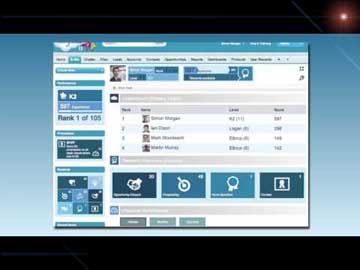 Plenty of sites serve as good resources for CRM information. ITtoolbox CRM , CRM Forum, and CRMGuru.com offer listings of CRM products, consultants, and services, as well as numerous articles and access to free e-mail newsletters. Most articles advise companies to begin by focusing on customers, a step that involves evaluating support strategies and processes.
“Historically, many companies’ first step toward CRM was sales-force automation,” says Pombriant. “Next came customer service and support.” But careful consideration and a willingness to change to benefit customers is the most important key to success. This can work for either large enterprises, or small businesses, says Dave Charlton of Company Magazine.
One of the oldest providers of online customer-support tools is Siebel Systems. With products in almost every CRM niche, Siebel serves businesses of all sizes, including the small and mid-size companies it defines as those with 50 to 1,000 employees. The company also targets specific vertical markets, including telecommunications, finance, and energy.
Posted by Chuck on August 31st, 2015 — Posted in Photography
Tags: neat photos, tricks for cool images
Wanting to do something different, I recently came up with a fun and beautiful way to photograph an ethnic bride. And you can easily adapt my techniques for your children or other portrait subjects. My photographs began with an image in my mind of my Indian bride floating among flowers. I considered how I might achieve the effect digitally, with the sparkling blue water offsetting her outfit and jewelry. But there’s just no substitute for the real thing!
 Luckily, my model went for the concept and was an extremely good sport, consenting to use her parents’ pool. Because of the veil and flowers, we needed some assistants. I positioned her mom in the pool arranging the flow of the head covering and nearby floating flowers. My assistant pushed flowers into the picture frame on the opposite side from the mother. Without as many details to worry about, it would be possible to do a shoot with only one assistant or even solo.
For clothing, I recommend using washable fabrics, which is what I used for my water bride. Chiffon floats
…
Posted by Chuck on August 20th, 2015 — Posted in Photography
Tags: taking photos outside, your images
As with most outdoor photography, you’ll find the most dramatic lighting first thing in the morning or in the late afternoon, when the sun is low in the sky. If the day is very hazy or windy, don’t bother going up–haze makes for murky photos, and strong winds cause turbulence and image blur due to camera movement. Shoot with the lens wide open in aperture-priority AE to get the fastest possible shutter speed, and lock focus at infinity (over populated areas, regulations require you to be at least 1000 feet above the highest building within 2000 feet of your flight path).
From an Office Window
 If you work in a high-rise office building (or can visit someone who does), you have a great vantage point for photography. It’s even a great way to get “aerial” photos without leaving the ground. We’re on the 18th floor of a 20-story building, and it’s amazing the scenes we see out the windows as the weather and time of day change. When shooting through windows, watch out for reflections (although you can use reflections …
Posted by Chuck on August 15th, 2015 — Posted in Photography
Tags: chromogenic films, extended range films, xr
In 1980 Ilford Imaging introduced a consumer variation of chromogenic film called XP1. This was an ISO 400 chromogenic film that was easy to use and gave incredible results. Eventually this emulsion evolved to XP2, and today’s XP2 Super. Intenscreen was also an early investor. Agfa introduced Vario-XL later the same year, but discontinued it a year later. Many of the staunch traditional film users thought the chromogenic concept to be a passing fad, but this new type of film caught on before long. Kodak later picked up on the idea and introduced chromogenic films for both APS and 35mm cameras. Even Konica came on board with their Monochrome VX400 film.
 Currently, there are five chromogenic black-and-white films available in 35mm format: Ilford XP2 Super 400, Kodak Black & White 400, Kodak Professional Portra 400BW, Kodak Professional T400 CN, and Konica Monochrome VX400. Portra 400BW was designed specifically to be printed on color paper; the others produce best results when printed on black-and-white papers, but can also be printed on color papers. XP2 and the two Kodak pro films are …
Posted by Chuck on August 11th, 2015 — Posted in Web Design
Tags: leveraging marketing dollars, websites for non-profits\
 Marketing is not only about raising money. Savvy marketing influences people to come alongside you and help you do things they may never do on their own. An intelligent Web site content strategy provides you with the foundation to attract visitors, keeps them interested in your mission or cause, and encourages them to keep coming back for more. And yes… you can and will raise funds in the process, says the experts at RBC Latino.
When people read an article or story on your Web site, for example, do you know precisely what you want them to do? Give you money, provide feedback, volunteer, be entertained, be informed, request more information? Whatever response you seek, you must first have settled on a clearly articulated content strategy. Here’s what we know for sure: the more options you give your visitors to become involved with your organization, the more relevant your Web site will become in their lives. The next most important thing we know: if you begin and sustain the conversation on issues your visitors want to discuss, you will come closer to finding advocates for your mission than if you simply talked endlessly about what is important to you. What are we saying? Simply this: encourage your visitors to help you shape your content. That may seem like a risky endeavor. In the end, however, the facts prove it is not.
Posted by Chuck on August 5th, 2015 — Posted in Content Management
Tags: content managing at a large level, corporate information management
 Although there is no guarantee that block exemption will be outlawed, manufacturers are concerned that any change in the legislation may cut off their all-important channel to the customers, which is primarily through the dealer network.
“The dealer network is the manufacturers’ interface with the customer. If the legislation changes, it could become extremely difficult for manufacturers to keep that tie with the customer,” Alfredo Filippone of the European Rail Congress explained.
Stefano Chmielewski, vicepresident of sales and marketing at Renault VI, confirmed that the portal, which is designed to build a direct relationship with customers by allowing them to configure their vehicle online, was set up in direct response to the expected end to block exemptions.
Aimed at people in the transport industry, the site allows customers to access an online version of Renault’s entire product range of 350 models, and 13,000 different configuration options, from which. they can configure a truck to their exact specifications.
Once the configuration is completed, an e-mail is sent directly to the nearest Renault dealer, who will make contact with the customer within
…
Posted by Chuck on August 1st, 2015 — Posted in Photography
Tags: business and images, specialized photography
The bracketing technique requires three pictures to be taken (some digital cameras offer an automatic bracketing exposure). The first picture is captured at what is believed to be the ideal exposure (f-stop); the second at no more than two f-stops higher, and the third at no more than two f-stops lower, than the original exposure. The three pictures will document the subject at a graduated range of exposures, which increases your chances of capturing an image with accurate color fidelity. This technique is useful for capturing tooth shade and for calibrating the camera’s auto-exposure mode, says Remi Goulet of SSFODF, a French Orthodontists association. Images captured using slide film, for example, will vary even if the film is over- or underexposed by only one-third of an f-stop.
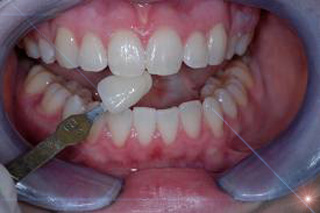 Aperture-priority mode also allows some control over depth of field. With a 100-mm lens, for example, the depth of field is quite shallow. For capturing &mil, such as an occlusal view, the aperture may need to be stepped down (decreased) to increase the depth of field. Most auto-exposure systems allow you to …
Posted by Chuck on July 26th, 2015 — Posted in Content Management
Tags: content management, keeping your site clean, managing your site's content
Understand the when and why of change
 Basic site administration, such as updating phone numbers and contacts or posting press releases, requires little or no strategic consideration, but almost every other site change calls for evaluating why you need the change and then mapping it back to original business goals. The beginning of any solid e-business initiative is rooted in a marriage of business goals and user needs, and any change must meet those same criteria.
Answering the question of why any change is necessary demands an understanding of user behavior, new corporate priorities, and/or how current business initiatives can be better served, and how they relate to overall objectives.
RECOMMENDATION: Here’s a simple method for evaluating change requests. If you can’t identify whom the audience is that will benefit/use the changed information, how it will benefit them, and how it will relate to other information on the site, then don’t make the change.
Consider the platinum partner program example. Marketing and sales want to use the program as a way to reward the most productive
…
Posted by Chuck on July 26th, 2015 — Posted in Photography
Tags: guides to selling photographs, the artist within
Photographs are also relatively inexpensive, which makes them quite attractive to both collectors and the gallery owners who sell them. Galleries can test the waters, so to speak, without having to necessarily make a huge investment. “You can buy a picture by a contemporary master of traditional photography for $1,000 to $5,000, which is very little money compared to prints or original paintings,” said Perloff.
 The potential collector base for photographs is also bigger than it’s ever been. No longer the darling of just the young and cutting-edge, photography has found a home in the collections of art lovers at all levels of the market. High-end collectors have been dropping millions at auction for work by such masters as Ansel Adams or Alfred Stieglitz. Yet other collectors are happy to plunk down a mere $500 to take home work by a yet-to-be-discovered artist.
“In a way, you have people with a lot of money at the high end and people with a little bit of money at the low end,” said The Photograph Collector’s Perloff. “Obviously, there are also …
Posted by Chuck on July 21st, 2015 — Posted in Web Design
Tags: creating an online album, photo websites
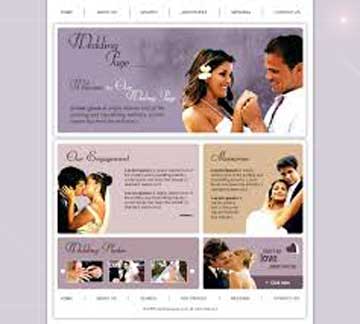 Judging from the expanding popularity of online photo sites, the vast majority of photographers are choosing photo Websites as a starting point. Many photo Websites offer free or nearly free Web storage and online albums. Some sites provide the space as part of the cost of processing, printing and scanning customers’ film. Others provide it entirely free of charge, making their money from advertising. With easily followed menus and guides, creating online albums couldn’t be easier.
There are a couple of things to remember before putting a Website together. First, make sure images are stored in the JPEG file format. (GIF will also work, but JPEG is preferred for imaging.) JPEG file compression is one of the best tools for keeping image size within reason. Finally create a folder or directory on the computer’s hard drive that contains the images to be uploaded. That makes it easier to organize the online album when the site asks for the location where images are being stored.
The actual process of registering and uploading images is remarkably easy. It’s pretty much the same
…

Your Words + MIne